Locaplace Magazine
Dorm full? How exchange students can find off-campus housing in Seoul
Off-campus housing guide for exchange students in Seoul when dorms are full. Compare short-term rooms by campus commute, semester dates, deposit, payment, and verification.
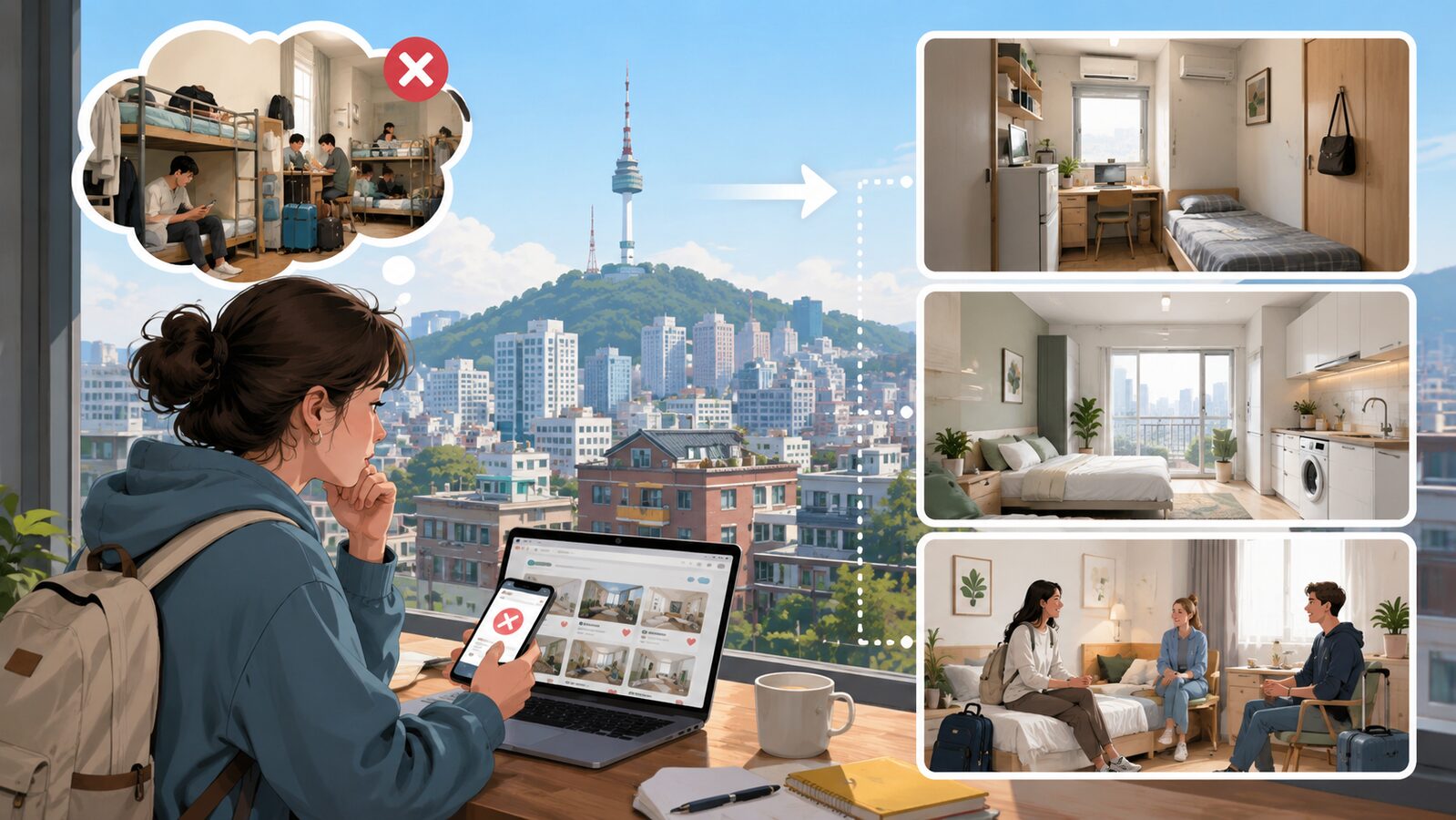
A dorm room is usually the first housing option exchange students think about in Seoul. It is close to campus, easy to understand, and often connected to the university's arrival process. But dorm rooms are limited. Some universities clearly explain that on-campus housing is available but not guaranteed, which means students need a backup plan before they arrive.
That backup plan should not be a last-minute panic search. Seoul has many off-campus housing options, but each one works differently. The right choice depends on your semester dates, budget, Korean language ability, need for privacy, and how much deposit you can prepare.
🏫 1. Start with your campus and semester dates
For exchange students, location is not just about the district name. A room near Yonsei, Ewha, Sogang, Korea University, Hanyang, SNU, or Hongik can mean very different commute patterns. Check the exact building where most of your classes will be held, then compare subway transfers and walking distance from the station.
Dates matter just as much. A full semester, a summer program, a winter program, and a language course all create different housing needs. If your stay is less than six months, a standard long-term studio contract may be heavier than necessary.
🛏️ 2. Know the main off-campus options
A goshiwon can be cheaper and easier to move into, but the room is usually small and shared facilities may be part of daily life. A share house can offer more community, but rules and roommates matter. A private studio or officetel gives more privacy, but it often comes with a larger deposit and longer contract expectations.
A verified short-term room can sit between these choices. It is useful when you need a furnished place, a simpler booking flow, and a stay period closer to your actual program dates. For students who are not ready to sign a long lease in Korean, this can reduce the first-arrival burden.
💳 3. Deposit and payment can change the whole decision
The monthly price is only one part of the cost. Off-campus studios in Seoul can require a significant security deposit, and students may also need to handle bank transfers, contract documents, utilities, and move-in timing. A lower monthly rent can become less realistic if the upfront cash requirement is too high.
When comparing options, ask this first: how much money must be ready before move-in? Then check whether card payment is available, whether fees are included, whether utilities are separate, and what happens if your program date changes.
🛡️ 4. Verification matters when you are booking from abroad
Many exchange students choose housing before landing in Korea. That makes verification important. You need to know whether the space is real, whether the host can be contacted, whether photos and conditions are clear, and whether the reservation and payment process leaves a record.
This is also why a structured app flow is useful. If search, inquiry, reservation, contract, and payment happen in one place, the student has fewer scattered messages to manage. For hosts, verification and records also make it clearer who is staying and why.
🙋 5. If the right room is not listed, leave a request
Exchange student housing is very date-sensitive. A room that works for March may not work for August. A room near campus may be too expensive for a one-month program. A student may need a private bathroom, elevator, desk, or late check-in because of a flight schedule.
If the exact room is not visible in search results, a request can turn your need into a clear signal. Share your school area, dates, budget, room type, and must-have conditions. Hosts can then propose registered spaces that match your situation instead of making you search every listing manually.
📌 Conclusion
If your dorm is full, the next step is not simply to find any room. It is to find an off-campus option that matches your program dates, commute, budget, deposit limit, and safety needs. Verified short-term rooms can be especially helpful for students who need a furnished, trackable, and flexible stay.
📚 Sources
- Korea University Global Services Center accommodation guide
- Yonsei Global Service Center off-campus housing guide
- SNU Office of International Affairs off-campus housing guide
- Locaplace short-term rental service information
See More on Locaplace
Need a room near your Seoul campus? Compare verified short-term rooms on Locaplace, or leave a request if the exact space you need is not listed yet.
Find exchange student housing on Locaplace