Locaplace Magazine
How LOCAPLACE helps international users book short-term rentals in Korea without speaking Korean
Locaplace helps international guests use short-term rentals in Korea in their own language, with automatic translation, multilingual chat, and verification flows designed for overseas users.
Most rental services ask international users to adapt first. Change your language. Translate the host's message. Guess which verification button applies to you. Move between apps until the booking finally makes sense.
Locaplace takes a different view. The first service is knowing your language. Before a guest compares rooms, asks a host a question, or starts verification, Locaplace tries to predict the language the user will feel most comfortable using.
Your language is part of the product
Locaplace supports a multilingual rental experience across the app. Users can choose the language they want to use, and the app can show key rental content in that language instead of making every message feel like homework.
That matters because short-term rental decisions are full of small details: dates, price, check-in, Wi-Fi, bedding, parking, pets, extension, and house rules. Missing one sentence can change the whole booking.
Chat in the language that feels natural
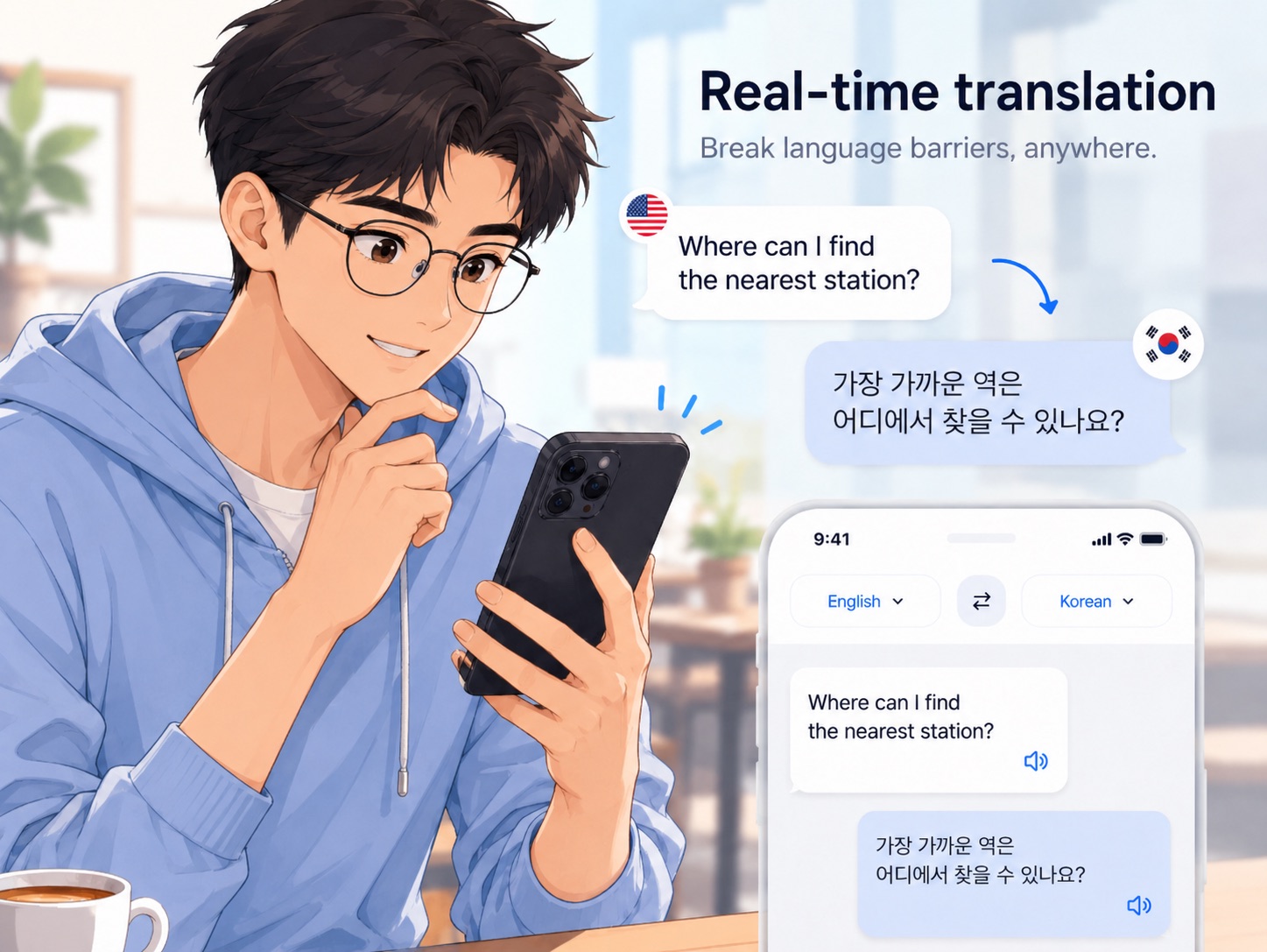
A Korean host can continue writing naturally. An international guest can read the conversation in the language they selected. The guest can ask about a two-week stay, check-in time, or room conditions without stopping to translate every reply somewhere else.
The same is true the other way around. When the guest writes in a language that is easier for them, the host side can still follow the conversation through Locaplace. The goal is simple: each person should be able to think in their own language while the booking stays in one place.
Verification should also understand the user
Language is not only about reading text. It also changes what a trustworthy onboarding path should feel like. A domestic user and an overseas guest may not have the same phone number, identity document, or verification habit.
Locaplace reflects that in the product. When the app predicts that a guest may be more comfortable outside a Korean-first flow, or when the user's account context requires a passport-based path, the verification journey can move toward the overseas guest flow instead of forcing a single domestic-only route.
That is where passport and NFC-based verification become part of the same experience. It is not a separate technical badge hidden in a corner. It is a path that appears when it can make the journey clearer for the person using the service.
The small moment that changes trust
For an international guest, the comforting moment is not only seeing English, Japanese, or Chinese on the screen. It is realizing that the service can meet them in the language that feels natural before they have to explain the situation.
The app predicts the language they are likely to use. The chat becomes readable. The booking details become easier to compare. The verification path starts to match the way they can actually prove who they are.
Why this matters for short-term rentals
Short-term housing in Korea is often needed at sensitive moments: arriving for school, starting a project, moving between homes, visiting for work, or staying before a longer plan is decided. In those moments, trust is not built by one big feature. It is built by many small moments where the service feels less foreign.
Automatic translation, multilingual chat, and overseas-friendly verification all point to the same idea: a guest should not need to become local before they can find a local space.
For hosts, language becomes demand
For hosts, this also matters. International demand is easier to welcome when every inquiry does not require manual translation. A host can answer practical questions in the language they are comfortable with, while the guest can still understand the booking conversation.
This does not replace careful communication or confirmed reservation terms. It removes the first layer of friction, so both sides can focus on the actual rental decision.
Conclusion
Locaplace automatic translation is not just text conversion. It is part of a broader product promise: understand the user's language, keep the conversation readable, and guide the user toward the verification path that fits them.
For short-term rentals in Korea, that is where trust begins. Not after the contract. Not after the payment. From the first moment the service predicts the language that can make the journey feel clearer.
See more on Locaplace
Looking for a short-term room in Korea? Open Locaplace to compare verified spaces and continue inquiries in the app.