Locaplace Magazine
10 Ways to Use a Locaplace Booking Page
Explore 10 ways to use a Locaplace booking page for roommates, monthly homes, workspaces, studios, classes, parking and storage, bicycles, cameras, electronics, and more.
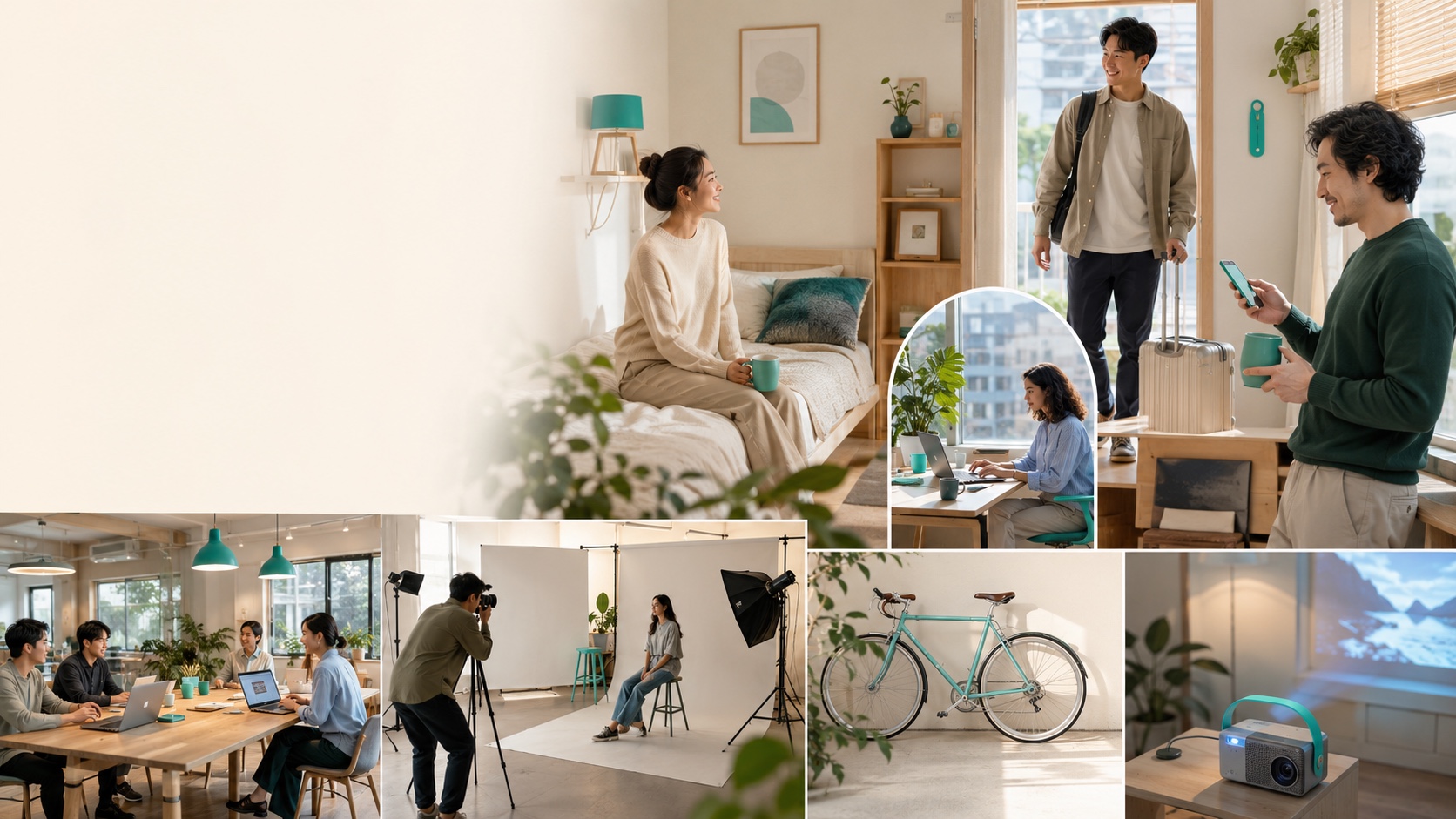
If you have a spare room, a workspace that is empty on certain days, or a camera you rarely use, how should you present it? Instead of posting photos and conditions across several channels, you can organize what is available, when it can be used, the terms, and the inquiry path on one booking page.
A Locaplace booking page is where individuals can introduce spaces and rentable items directly, then manage inquiries and bookings. From finding a roommate and offering a home for a one-month stay to renting out a workspace or another idle personal asset, the key information can stay together on one page.
Want to explore the booking page first?
The English booking page guide introduces how a booking page is structured and used. If you already know which space or item you want to present, go directly to the booking-page builder and add your photos, terms, and availability.
Would you like to see the booking-page features and examples first? Visit the English booking page
Already know which space or rentable item to introduce? Start directly in the builder. Create an English booking page
1. Find a roommate
Post room photos, monthly rent and shared costs, the move-in date, and household rules, then receive inquiries from people who may be a good fit. Smoking, pets, visitors, and cleaning responsibilities are easier to discuss when the expectations are visible before the first conversation.
2. Share part of your home
If you have a spare room or bed, you can present it for monthly use. Separate the private and shared areas, then explain how the bathroom and kitchen are used, how much storage is available, and the expected length of residence.
3. Offer a home for a one-month stay
People preparing for a move, studying abroad, or traveling for work may need a home for one month or longer. List the move-in and move-out dates, monthly price, utilities and maintenance fees, furniture and appliances, and the minimum rental period so both sides can compare the important conditions early.
4. Rent a room to an international or exchange student
Show the available date, commute to schools and public transportation, furniture, and daily living environment, then receive housing inquiries. Divide the contract period, deposit, included costs, and required move-in documents into short, clear sections, and confirm every agreed condition again before signing.
5. Rent out a home while you are away
If a long trip or work assignment will leave your home empty for a defined period, you can collect housing inquiries for those dates. Separate usable areas from personal storage, and explain access, pets, parking, maintenance fees, and restoration expectations in advance.
6. Rent out a small office or studio
A quiet place for solo work or a small team meeting can be reserved by the hour or day. Include the number of seats, internet connection, outlets, monitor or whiteboard, heating and cooling, access hours, and whether outside visitors are allowed.
7. Offer a shooting or practice space
A room can be used for photography, video production, music, or dance practice. Show the best hours for natural light, ceiling height, backdrops and lighting, mirrors and speakers, soundproofing, capacity, and permitted noise hours.
8. Host classes or small groups
Tutoring, book clubs, craft workshops, and small classes all need practical details. Show the table layout, number of seats, tools that can be provided, food and cleanup rules, and whether recurring weekly or monthly sessions can be discussed.
9. Rent out parking, storage, or extra space
An unused parking spot or storage area may be useful to someone nearby. State the permitted vehicle size, access hours, height restrictions, allowed and prohibited stored items, temperature, humidity and security conditions, and any insurance the user needs to arrange independently.
10. Rent out a bicycle, camera, or electronic device
Show the available dates and terms, then receive a booking request or inquiry. Photograph the model, accessories, and current condition, explain how to use it, and agree in advance on pickup and return, loss, damage, consumables, and late-return costs.
What to check before offering a home
For residential use, first confirm that the arrangement is for genuine residence, that you have the right to rent or share the space, whether the landlord's consent is required, and that the dates and costs are exact. If you are renting a home or room that you lease from someone else, review the lease and building rules and obtain any required consent before proceeding.
Even for a short period, repeatedly accepting overnight guests while providing lodging-style services such as cleaning or linen changes may trigger separate lodging-business requirements in Korea. The boundary between a residential lease and a lodging operation depends on the actual setup and services, so describe your intended operation to the relevant city, county, or district office before you begin.
Is personal renting always illegal?
It is not accurate to say that renting out a space or item is automatically illegal simply because the provider is an individual or does not yet have a business registration. What matters is whether the activity is a simple rental or a repeated and continuing service, what is being offered, and under which conditions. Frequency, profit, and additional services may change business-registration, tax, notification, or licensing duties, so explain your operating model to the tax office and the relevant authority.
- Confirm that you own the space or item or otherwise have the legal right to rent it.
- Review the lease, landlord consent, building rules, permitted use, and other restrictions.
- State the dates, price, deposit, utilities, cancellation, and refund terms before accepting a booking.
- Agree on loss, damage, restoration, compensation, and how condition will be recorded at handoff and return.
- Ask the relevant authority whether lodging, food sales, teaching, or another activity needs a separate notification or permit.
- If the activity is repeated for profit, confirm business-registration and tax duties with the tax office or a tax professional.
A useful booking page explains the conditions first
A booking page does not mean that every rental is permitted or guaranteed. Its role is to show enough information for people to make an informed decision. Along with photos and benefits, include availability, what is included, restrictions, prices, cancellation rules, and the pickup, return, move-in, or access process.
Start with one space or item you know well. Add the questions people ask most often, refine the contract and usage process, and expand only after the first listing feels clear and manageable.
Sources and references
- Locaplace English booking page and booking-page builder
- Korea's Civil Act, Article 629 (restrictions on assignment of leasehold and sublease)
- Korea's Public Health Control Act, Articles 2 and 3 (definition of lodging business and reporting of public health businesses)
Once the terms for your space or rentable item are clear, create your own booking page. Open the English booking-page builder